Bone Graft Before Dental Implants: What to Expect and Why It Matters
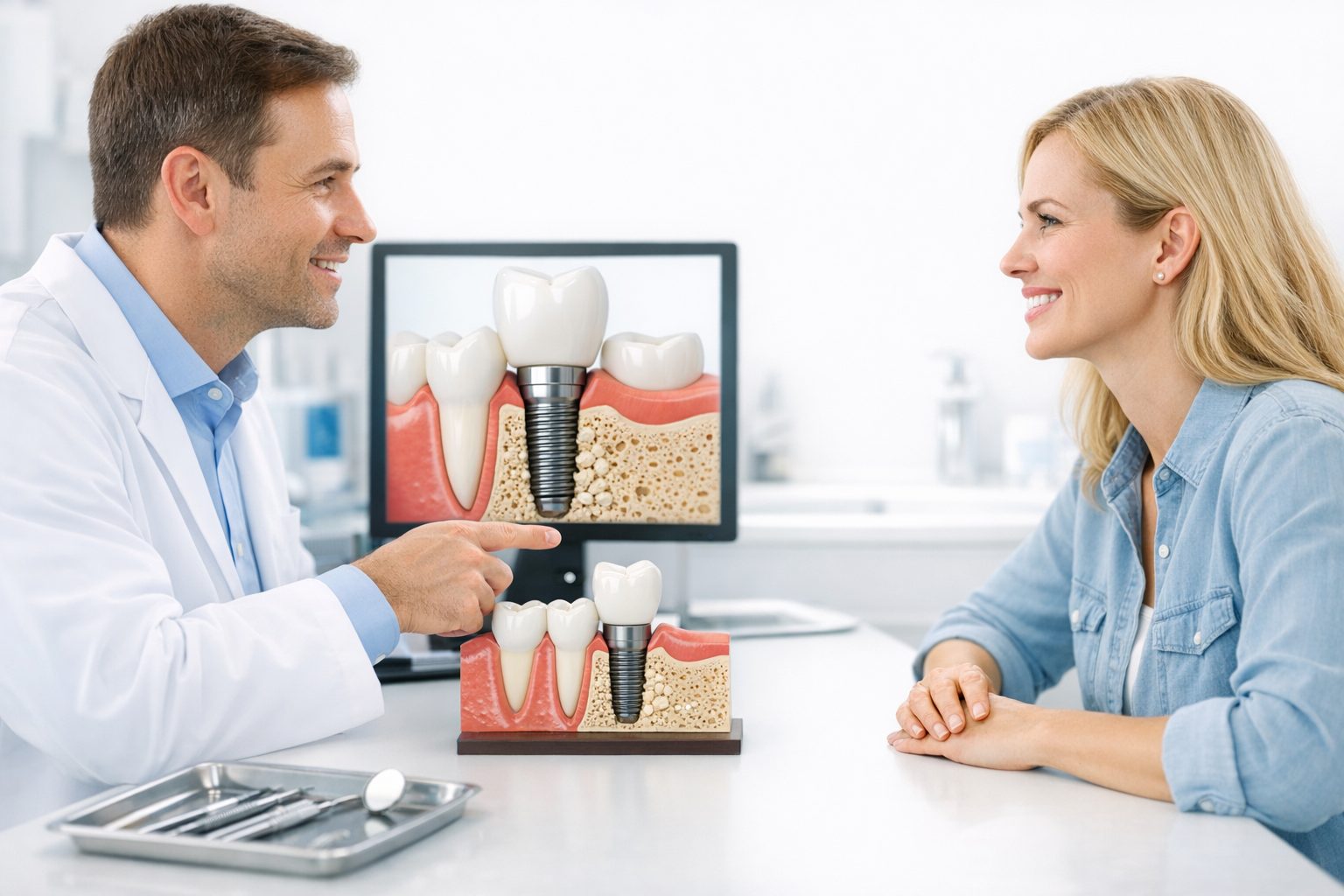
Bone graft before dental implants can sound like an extra step you did not plan for. It is also a common part of treatment planning when the jawbone has changed after tooth loss. The good news is that it is usually a straightforward, well-organised process.
If you have been missing a tooth for a while, the bone underneath can shrink over time. Many people only discover this when they start asking about replacing a tooth. In clinic, it often comes up after an X-ray or 3D scan, not because anything feels “wrong.”
Whether you need grafting depends on your mouth, your health, and how the tooth was lost. Some patients do perfectly well without it, while others benefit from extra support first. The aim is simple: create a stable foundation so an implant can integrate securely.
Why Bone Levels Matter for Dental Implants
An implant needs enough healthy bone around it to anchor firmly, much like a fence post needs solid ground. If the bone is too thin or low, your dentist may suggest bone graft before dental implants to rebuild that support. This is decided after assessment, not guesswork.
In many cases, bone reduces after an extraction, gum disease, or long-term denture wear. A real-life example we often see is a molar removed years ago, where the area looks fine on the surface but has limited width underneath. A scan helps measure the space and plan safely.
You might still hear about dental implants as an option even if bone is missing, because grafting can widen the possibilities. It does not automatically mean a long delay, as some grafts can be done at the same visit as an extraction or implant placement. Your clinician will explain the likely timelines for your situation.
It is also worth checking your clinician is appropriately registered; you can read more via the General Dental Council. That peace of mind matters when you are considering surgical care. Always ask who will be providing each part of the treatment.
Bone Graft Before Dental Implants: The Process, Materials, and Healing
A bone graft is a small amount of bone material placed where support is needed. It acts as a scaffold so your body can grow new bone over time. Many people are surprised at how small the grafted area can be.
Graft material may be your own bone, processed donor bone, or synthetic options, depending on the case. Your dentist will also consider the gum thickness and whether a membrane is helpful to protect the site. A typical real-life detail is that you may leave with a few stitches and clear aftercare instructions for the first week.
Healing time varies, but it is often a few months before the implant stage, especially for larger grafts. During that period, keeping the area clean and avoiding smoking can make a difference. Bone graft before dental implants is usually planned to minimise disruption to everyday life.
- Expect some swelling for two to three days after grafting.
- Soft foods help while tenderness settles, especially on the first night.
- Follow cleaning advice to protect stitches and lower infection risk.
- Avoid smoking, as it can slow healing and reduce success.
- Attend review visits so your dentist can confirm healthy progress.
If you are replacing multiple teeth, your plan may mention options like All-on-4 or denture implants. These treatments can sometimes reduce the number of implants needed, but they still rely on good bone in key areas. A clinician will talk you through what is realistic for your bite and bone levels.
Ready to Talk About Replacing Missing Teeth?
If you are weighing up bone graft before dental implants, a proper assessment can make the next steps feel much clearer. A scan and exam can show whether grafting is needed, and if it can be combined with another stage. You can book a free dental implant consultation to discuss options in a calm, no-pressure way.
Bring any questions you have about healing time, comfort, or costs, and it helps to note any medications too. We can explain what bone graft before dental implants would look like for your mouth, and what alternatives may exist. The goal is a plan that feels safe, understandable, and suitable for you.