All-on-4 Dental Implants Explained: What to Expect and Who They Suit
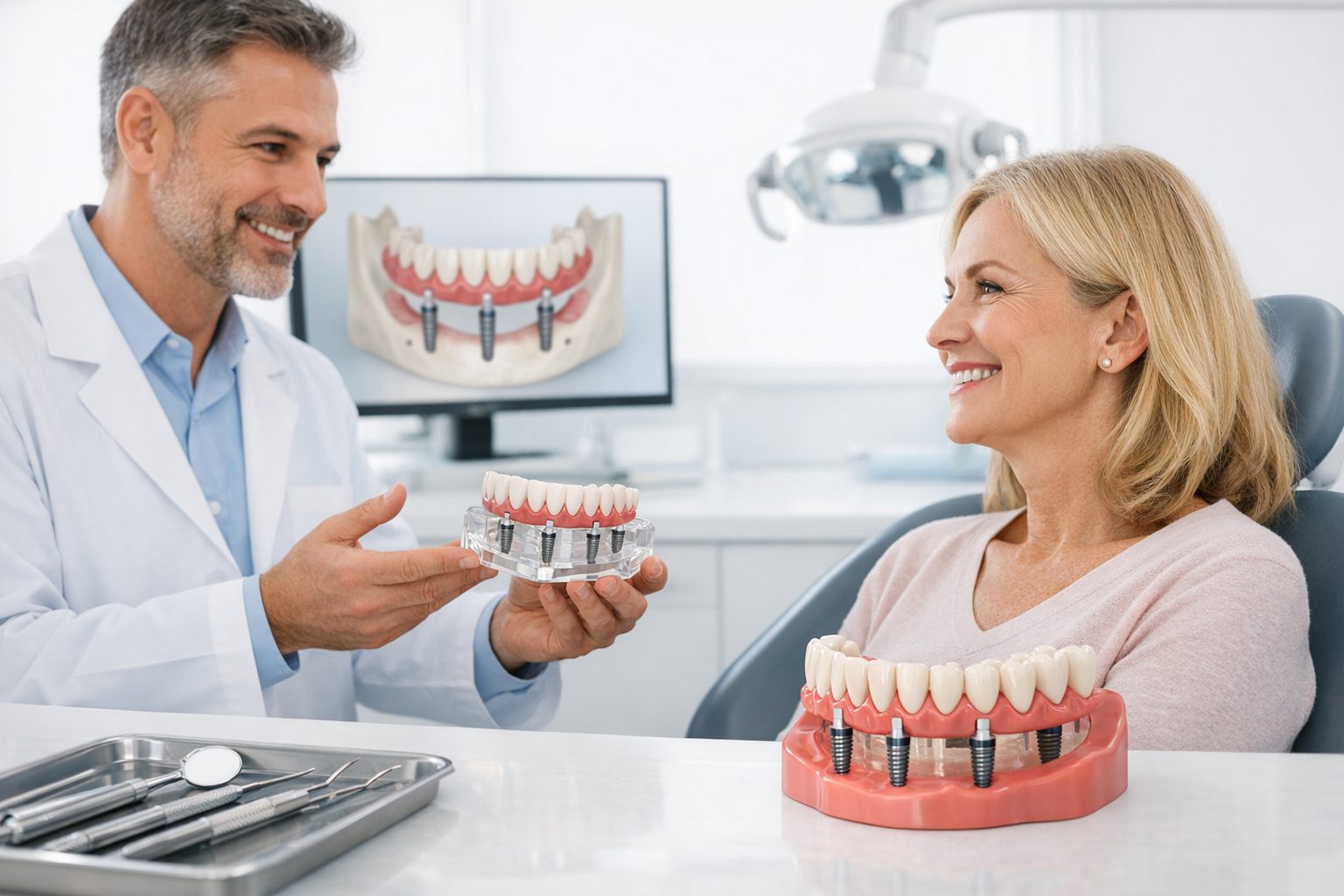
All-on-4 dental implants explained: it’s a way to replace a full arch with a fixed set of teeth. Instead of one implant per missing tooth, four implants can support a complete bridge. For many people, it feels closer to natural teeth than a loose denture.
If you’ve struggled with slipping plates, sore spots, or avoiding certain foods, you’re not alone. People often ask whether this is “same-day teeth” and what that really means. The answer depends on bone, gum health, and planning, but the goal is a secure smile.
It can also feel overwhelming because there are lots of terms: implants, bridges, abutments, and temporary teeth. This guide keeps it practical, so you know what questions to ask. It’s information to support a consultation, not personalised advice.
How All-on-4 Works Day to Day
The idea is simple: four implants are placed in the jaw to hold a full set of teeth. Two are usually placed towards the front, and two are angled towards the back to use available bone. When people say all-on-4 dental implants explained in plain English, it means “fewer implants, one fixed bridge.”
After healing, the bridge is secured so it doesn’t come in and out at home. You’ll still clean it daily, but more like caring for teeth than managing a denture. A real-life detail many patients notice is improved confidence ordering food out, because stability often feels predictable.
If you’re comparing options, you might also hear about All-on-6, which uses more implants for extra support in some cases. Some people also consider denture implants when they want a removable denture that snaps in securely. A professional assessment is the best way to match the option to your bite, bone, and goals.
- Many people can chew more confidently than with traditional dentures.
- Planning may include 3D scans to map nerves and bone.
- A temporary bridge is often fitted while implants integrate and heal.
- Cleaning uses brushes and water flossers to reach under the bridge.
- Follow-up visits help adjust bite pressure and protect the implants.
All-on-4 Dental Implants Explained: Steps, Timing, and Comfort
The process usually begins with a detailed check-up, scans, and a conversation about your medical history. If you currently have failing teeth, they may be removed and the implants placed in the same visit in many cases. This is where the “teeth in a day” idea can apply, using a temporary fixed bridge while healing happens.
Comfort is a common concern, and it’s normal to feel anxious about treatment. With modern techniques, many patients describe pressure and post-op tenderness rather than sharp pain, and this is managed with aftercare guidance. For peace of mind, you can confirm your clinician’s registration with the General Dental Council.
Healing time varies, but the implants need a period to bond with the bone, and the final bridge is then created for fit and aesthetics. A real-life detail to plan for is keeping a softer diet early on, like pasta, fish, and well-cooked veg. If you’re researching all-on-4 dental implants explained for a family member, it helps to ask about timelines, cleaning routines, and follow-up checks.
Ready to Explore Replacing a Full Set of Teeth?
If you’re considering replacing your teeth and want calm answers, a chat can really help. You can start with a free dental implant consultation to discuss goals, costs, and whether scans are needed. It’s a low-pressure way to get clarity on options.
Bring a short list of questions, including cleaning, expected appointments, and what happens if you grind your teeth. If you’d like all-on-4 dental implants explained with your own situation in mind, we can talk through suitability and alternatives. When you’re ready, the next step is simply a tailored plan and clear timescales.