Troubleshoot Full Mouth Dental Implant Issues
Full mouth dental implants can be transformative, offering hope to those who’ve struggled with missing teeth. These implants replace an entire set of teeth, enhancing both appearance and functionality. Yet, despite their advantages, challenges may occur. Identifying potential issues and knowing how to address them is crucial for maintaining a healthy smile.
Understanding potential problems with full mouth dental implants is key to ensuring long-term success. While most procedures proceed smoothly, discomfort and healing delays might occur. Infections can also surface without proper care. Recognising these concerns and learning how to handle them can help you achieve a hassle-free experience.
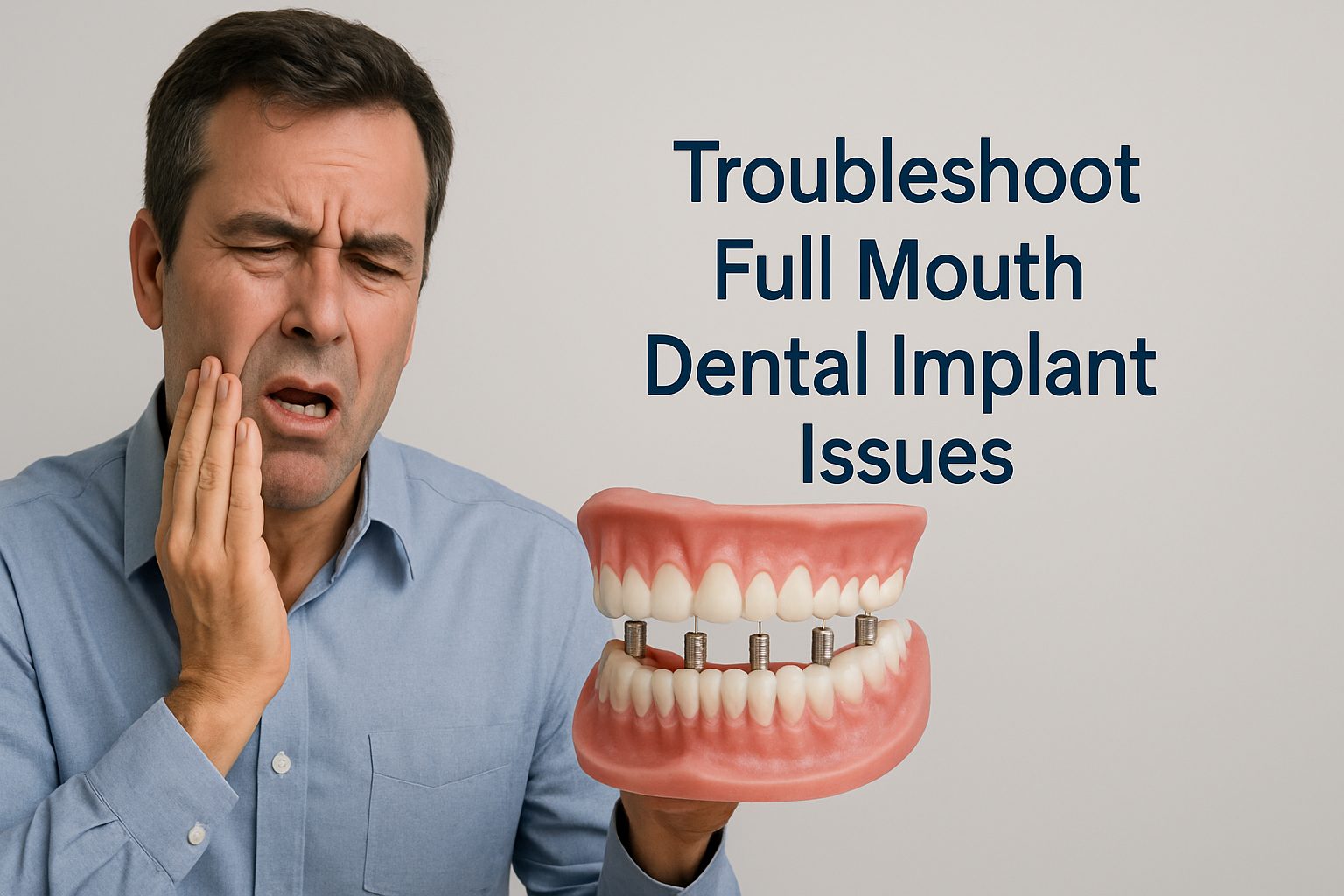
Common Problems With Full Mouth Dental Implants
There are a few concerns one might encounter with full mouth dental implants. Typical issues include:
- Discomfort: After the procedure, feeling some discomfort is normal. This might involve sore gums or tenderness, often improving as healing progresses.
- Healing Delays: For some, healing takes longer than anticipated. This might be due to individual health conditions or not following aftercare instructions.
- Minor Infections: Infections may develop if oral hygiene is not strictly maintained. Signs include redness, swelling, or unusual pain.
- Implant Loosening or Failure: Implants might feel loose if the jawbone doesn’t integrate well or if there’s excessive strain on the implant.
Recognising these issues early can prevent them from worsening. Regular dental check-ups and good oral hygiene are essential in addressing these concerns proactively.
Diagnosing Implant Problems
Identifying if something’s wrong with your implants requires attentiveness. It’s important to spot signs of trouble and address them quickly to avoid complications. Here’s how you can detect potential issues early on:
- Pain or Discomfort: Unusual pain or discomfort is a sign that shouldn’t be ignored. It might suggest an issue with the implant.
- Swelling or Redness: Inflammation or swelling near the implant site can signal an infection or other issue requiring attention.
- Unusual Movements: A loose or wobbly implant warrants seeking advice from a dental professional. A stable implant should feel like natural teeth.
Regular check-ups are vital in keeping implants free of problems. During visits, the dentist will examine your implants to ensure they’re secure and trouble-free. Staying vigilant and attentive to changes in your oral health helps catch issues early.
Solutions and Treatments
When dealing with issues related to full mouth dental implants, professional advice is essential. Dentists have various methods to address these common problems. For discomfort and minor infections, a simple cleaning or prescribed treatment might suffice. Regular professional cleanings can also prevent infections, keeping your implants in good condition.
If implants are loose, a dentist might suggest re-fitting or replacing certain components to ensure proper integration with the jawbone. Sometimes, corrective procedures are necessary, but dental professionals will guide you through each step and provide advice tailored to your needs.
Discuss any concerns during visits. A proactive approach can prevent small problems from escalating, allowing you to enjoy the benefits of your implants.
Costs and Considerations in Yeovil
Understanding costs is essential when considering full mouth dental implants, particularly in areas like Yeovil. Prices vary based on factors like the complexity of your case and materials used. Discuss details with your dentist during initial consultations to avoid surprises.
Here are a few tips for managing the financial aspect:
- Budget Planning: Assess your finances and set a realistic budget to identify what you can afford and plan accordingly.
- Insurance Review: Check with your provider to see if any procedure parts are covered. While coverage may be limited, explore all possibilities.
- Payment Plans: Many clinics offer payment plans or financing options, allowing costs to be spread over manageable instalments.
Understanding these elements can help make your journey towards a healthier smile smoother.
Keeping Your Implants Healthy
Proper maintenance is crucial for long-lasting implants. Incorporate these key habits into your daily routine:
Consistent brushing and flossing is vital. Use a non-abrasive toothbrush and soft floss to prevent damage to the implants and surrounding gums. Adding antibacterial mouthwash can reduce plaque build-up.
Diet also plays a role. Avoid hard or sticky foods to prevent unnecessary strain on implants. Opt for a balanced diet that supports oral health with plenty of fruits and vegetables.
Regular dental visits are crucial. Dentists can clean hard-to-reach areas and check for signs of trouble during appointments, ensuring implants stay strong and functional.
Your Next Steps to a Healthy Smile
Starting your journey with full mouth dental implants may seem overwhelming, but staying informed makes it manageable. By understanding common problems, costs, and maintenance strategies, you can keep your implants in great shape.
Approaching implant care with knowledge protects your investment and enhances your quality of life. Enjoy meals with ease and smile freely, knowing your teeth are well-cared-for. A proactive approach to dental health inspires confidence and promises a brighter future.
If you’re curious about the full mouth of dental implants cost and want to explore the options available to you, visit Smile Stories for more information. Our team is dedicated to providing you with solutions that suit both your needs and budget. Learn more about the various implant procedures and take the next step to enhance your oral health.